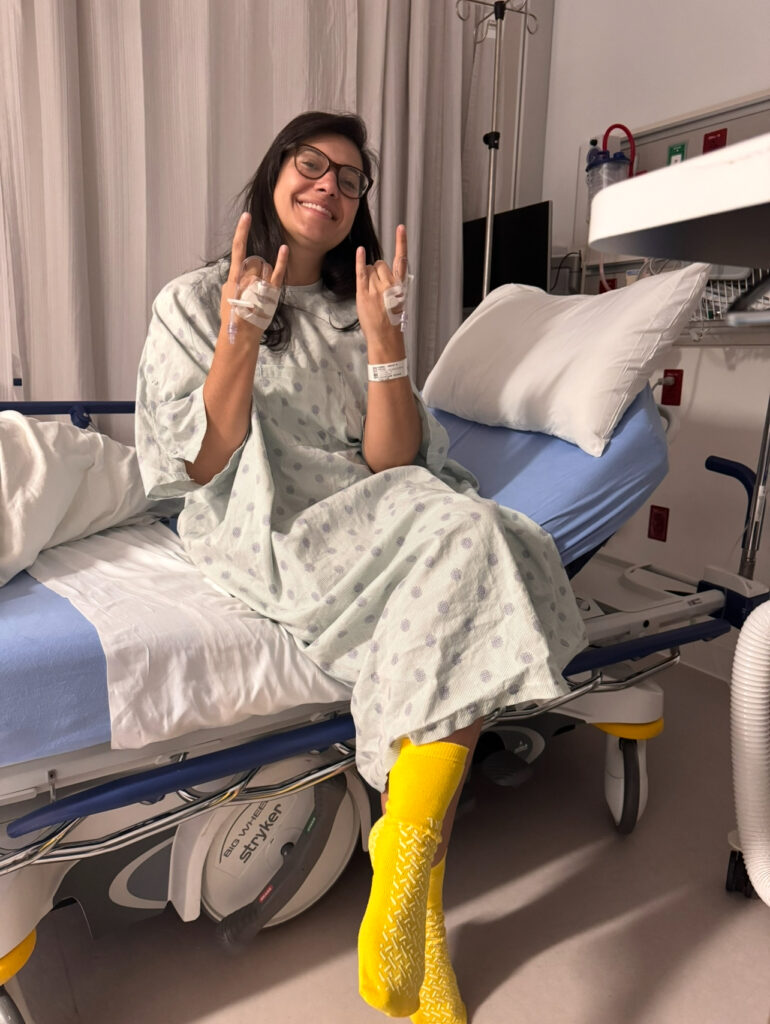
The surgery process is, more often than not, exactly the same.
You walk into the building enveloped in the odor of anti-septic soap. You wait an extra seven minutes at the check-in desk because some lady who is having a steroid shot under twilight is freaking out and dumping all of her trauma and fears onto the receptionist.
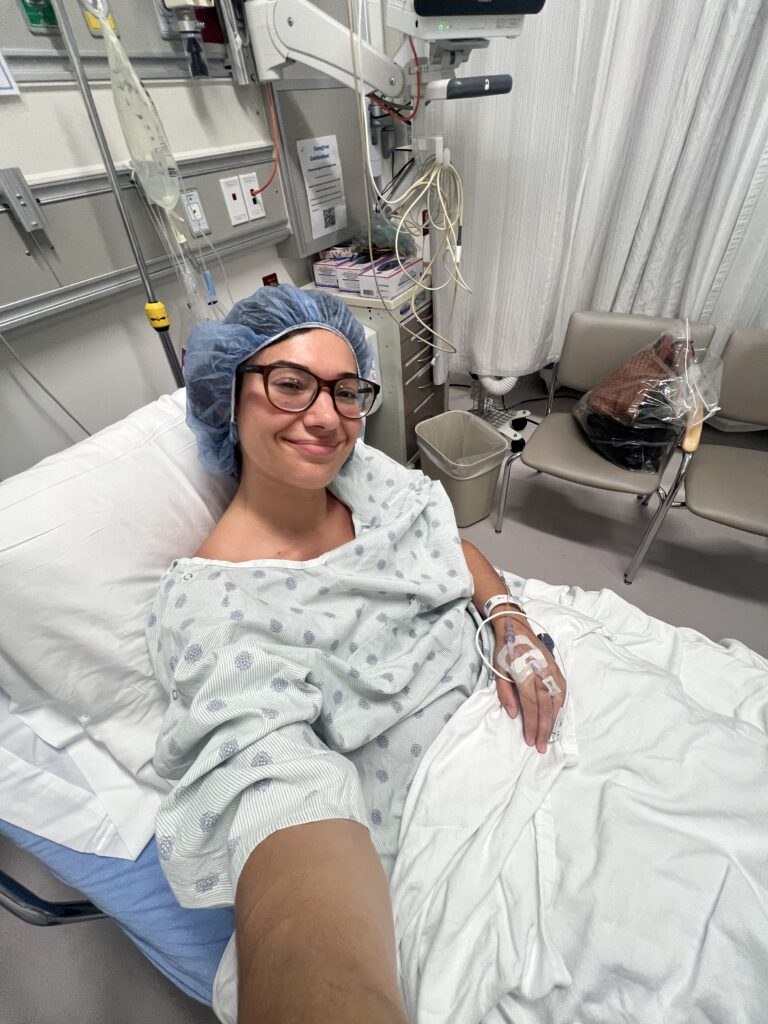
You try not to roll your eyes. Remember to be empathetic. Unlike you, not everyone has gone through the medical ringer before age 35. You finally approach the desk.
The receptionist asks for your phone number, date of birth, and full name, in that order. Because in this system, you are not identified as a human being, but a series of numbers.
She wraps a plastic hospital bracelet tightly around your wrist and asks you to repeat: phone number, date of birth, full name.
You hardly have time to sit down before the nurse appears from behind the surgery suite. She calls your name.
Despite the volume and clarity of her voice, an elderly gentleman jumps in front of you. “I thought you said Alfred!” You and the nurse share a look as she also asks you to repeat your birth date and name. She scans the barcode on the plastic hospital band.
“When was the last time you ate or drank something?” she asks with a soft smile.
“I had dinner last night at 8:30 and I drank some water and Gatorade this morning until 9:30, two hours before arrival.”
“Excellent,” she says as she whips a privacy curtain to the left. “At least someone knows how to follow instructions.”
You enter the makeshift room. On the twin-size bed is a green-blue gown with stripes and decorative geometrical patterns, a plastic bag labelled “patient belongings,” two white cotton blankets, and a pair of yellow grippy socks in plastic packaging.
“Do you think you can pee for me?”
You smile and nod at the nurse, “Yes, of course. I’m ready to go.”
She hands you a small plastic cup and smiles a little wider. “You really know what you’re doing!”
“This is my 8th surgery…I know the procedure.”
You both laugh.
You pee in the cup and walk it back over to the nurse who takes an eyedropper and transfers your excrement to a pregnancy test. It predictably turns negative so the surgery can carry on.
The nurse tells you to undress completely, put on the gown backwards, and place your belongings in the bag.
You do as she says. The gown and socks and sheets are starchy but put aside any thoughts of discomfort. It’s already enough to deal with the cumulative medical PTSD that gets triggered the longer you’re lying under these blinding fluorescent lights, listening to that incessant beeping, smelling that goddamn fucking anti-septic soap.
“All ready?” The nurse whips open the privacy curtain again.
You sit still as your body becomes a marionette. The nurse works quickly, wrapping a blood pressure cuff around your arm and fastening an oximeter to your left ring finger. She hands you a small cup of assorted pills as she quickly rattles off the names: Tylenol, Benadryl, Cymbalta (an anti-depressant? apparently it helps with pain). She clicks away on her computer as you swallow the pills in one gulp.
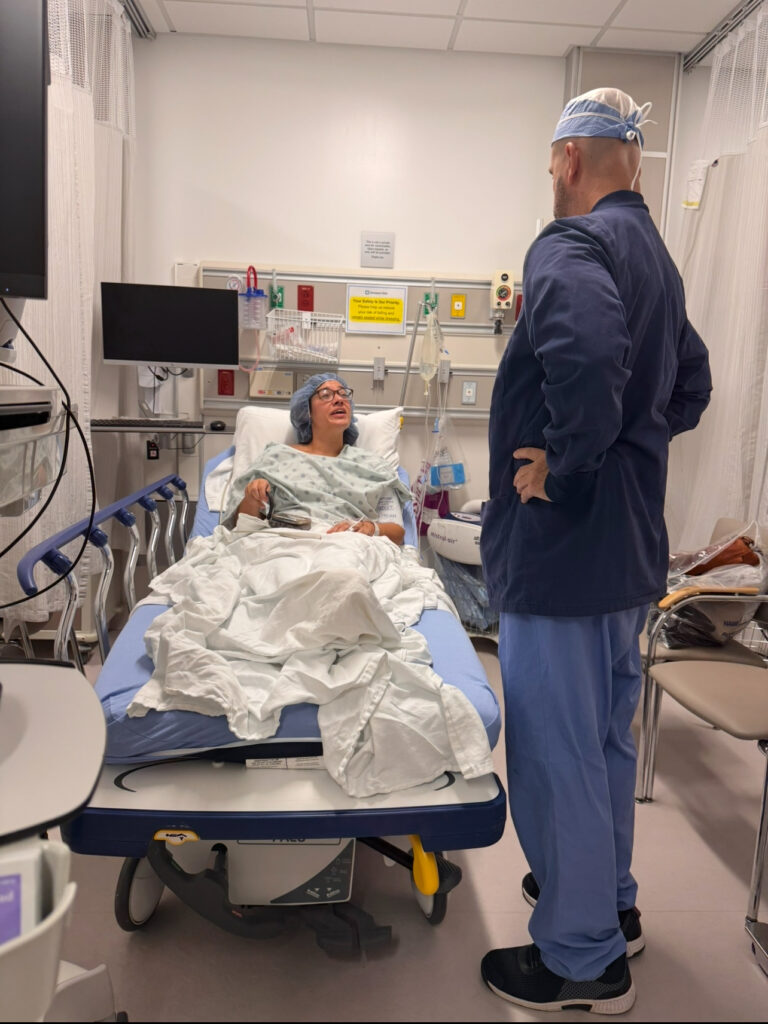
You watch as the nurse reviews her IV set-up, ensuring each item is readily available. She comes over and examines your left arm.
“The good elbow vein is in my right arm, but to be honest with you, I prefer it in the hand.”
The nurse smiles at you again. “Perfect. That’s what I prefer too.”
You find a sick pleasure in observing every step of the intravenous insertion. First the torniquet, then the search for a stable vein, slight pressure to keep the blood-filled noodle in place, then a quick pinch of the hollow needle, crimson slides up the line, and the catheter is left hanging in the vein. The nurse carefully applies Tegaderm to keep everything in place, then links the connectors of your IV with a bag of saline fluid.
Things move quickly now.
You speak with the anesthesia resident, the charge nurse, and the anesthesiologist. You repeat your name and date of birth three times. You answer the same questions about your medical history three times. You recite the procedures you are having three times.
The doctor comes and now everyone is in the same room, smiling and eager because they get to play Operation while you get to be the unconscious corporeal puppet on the table.
You are wheeled back in the surgery room, making bad jokes along the way. It helps with your nervousness. Inside the sterile operating quarters, the anesthesia resident announces that he is administering Versed, “for any nerves.”
You feel calmer immediately as the warmth flushes through your veins. But even approaching unconsciousness, you must make one last joke.
The charge nurse asks you to move from the hospital bed to the surgery table, already fit and ready with the proper equipment for an endometriosis excision.
You snicker. “Ah, shit…the people on Reddit were right…”
“Right about what?” The anesthesia resident is young enough to not need context on the background of Reddit.
“I know what fuckin’ humiliating position you’re about to put me in for this surgery…”
(Go ahead and Google “endometriosis surgery position”)
The entire room busts out laughing.
You giggle proudly as the anesthesiologist lowers an oxygen mask over your face.
“Time for a nap, funny girl,” he says. “Count back from 10 for me.”
You don’t even bother to count this time. You love this part.
Lights out bitch.
***
You wake up from surgery a little fuzzy but surprisingly warm. A ribbed plastic tube pumps heated air beneath your blankets. You’re always wake up from anesthesia shivering and have to ask for more warmth. These nurses cared enough to notice and prioritize your comfort.
You let yourself blink slowly back into awareness. The doctor comes in and everything he says is in slow motion, but you know it is good news and the procedure was successful. A new nurse asks if you want something to drink. Ginger ale is always the beverage of choice. He says he’s also going load you up good pain meds so you can rest when you get home.
Thank God.
You get an intravenous micro-shot of fentanyl and swallow a 512 tablet with the crispy ginger ale. The rest of the night is a blur.
You recover from the surgery in a daze of immediate release Percocets and endless episodes of Vanderpump Rules. Your mother stays the first night but leaves the next day because your cousin and her kids are coming to stay.
In the days that follow, people are eager to know how you’re doing. The dreaded questions and follow-up determinations about your current state: “Do you feel better? You sound better.” “How are you recovering? You don’t look like you’ve just had surgery.”
You smile and nod and try to communicate the complex reality. They don’t see that you are completely alone for almost the entire first week of recovery, caring for yourself and your two dogs. Other people who said they would show up couldn’t or didn’t.
The only thing you want is someone to bring you a glass of water without you having to ask.
You are, once again, forced to be strong.
You are, once again, forced to handle it alone.
They say: “You look better; You sound fine.”
They don’t see the consecutive days and nights when you are on stuck on the couch in fetal position cradling a heating pad turned to the max, crying screaming writhing.
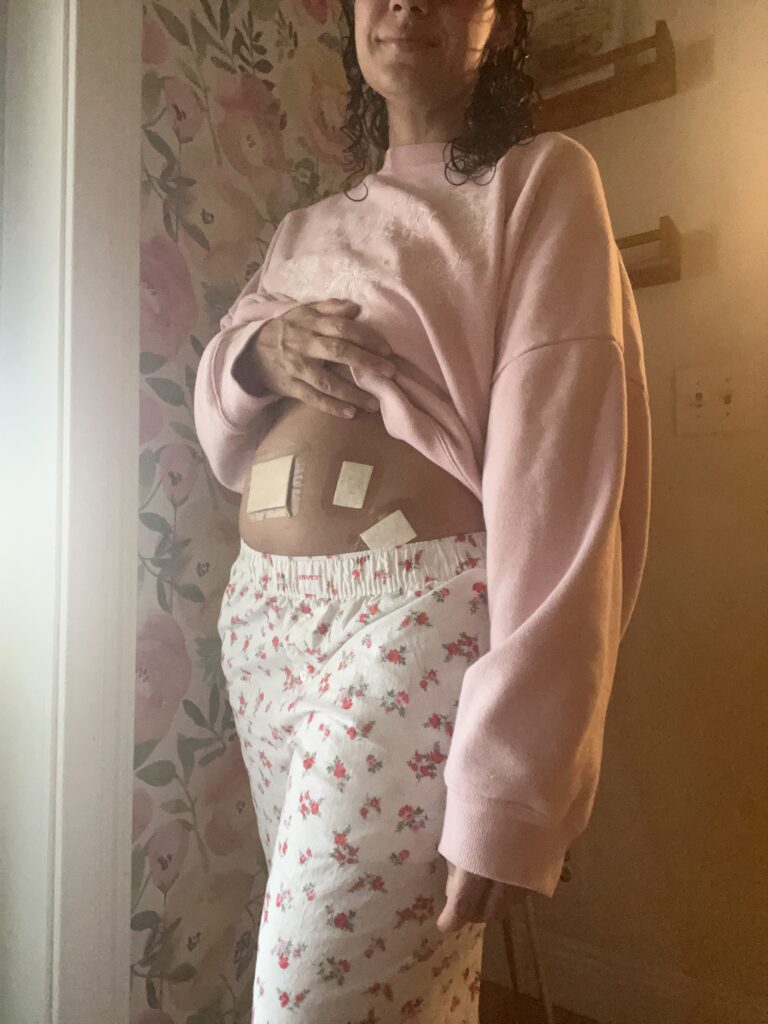
You want to retort with the bitter truth: “Of course I don’t look or sound unwell—I’ve been putting on this performance my entire life. I play the role perfectly, don’t I?”
Instead, you smile, nod. Tell them: “Thank you. I’m still feeling up and down.”
You want to retire from acting. Let someone else take on the role of Strongest Soldier.
You are now somehow a month out from the surgery and the days are still unpredictable. You are forced to go back to work and continue on as “normal.”
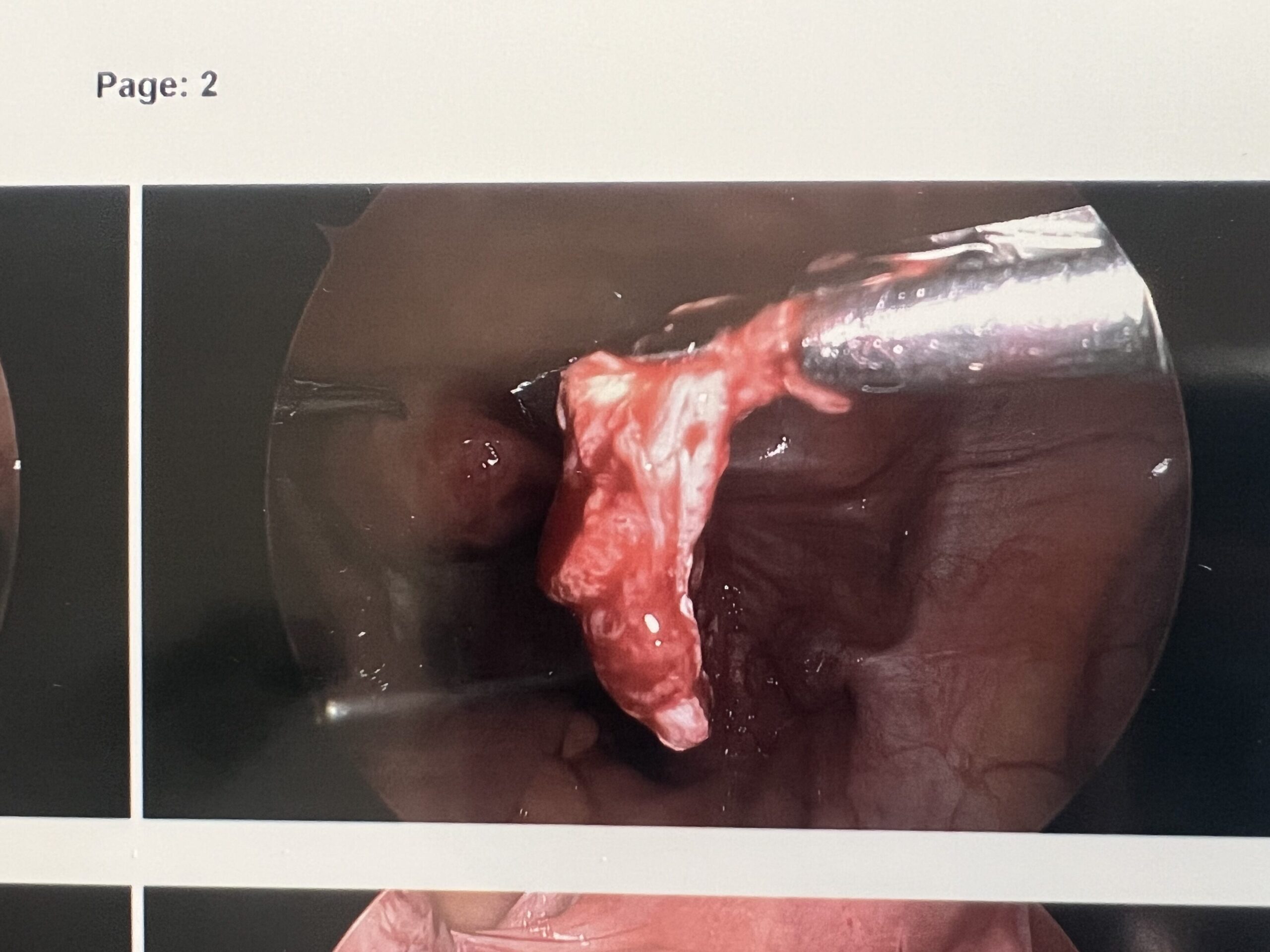
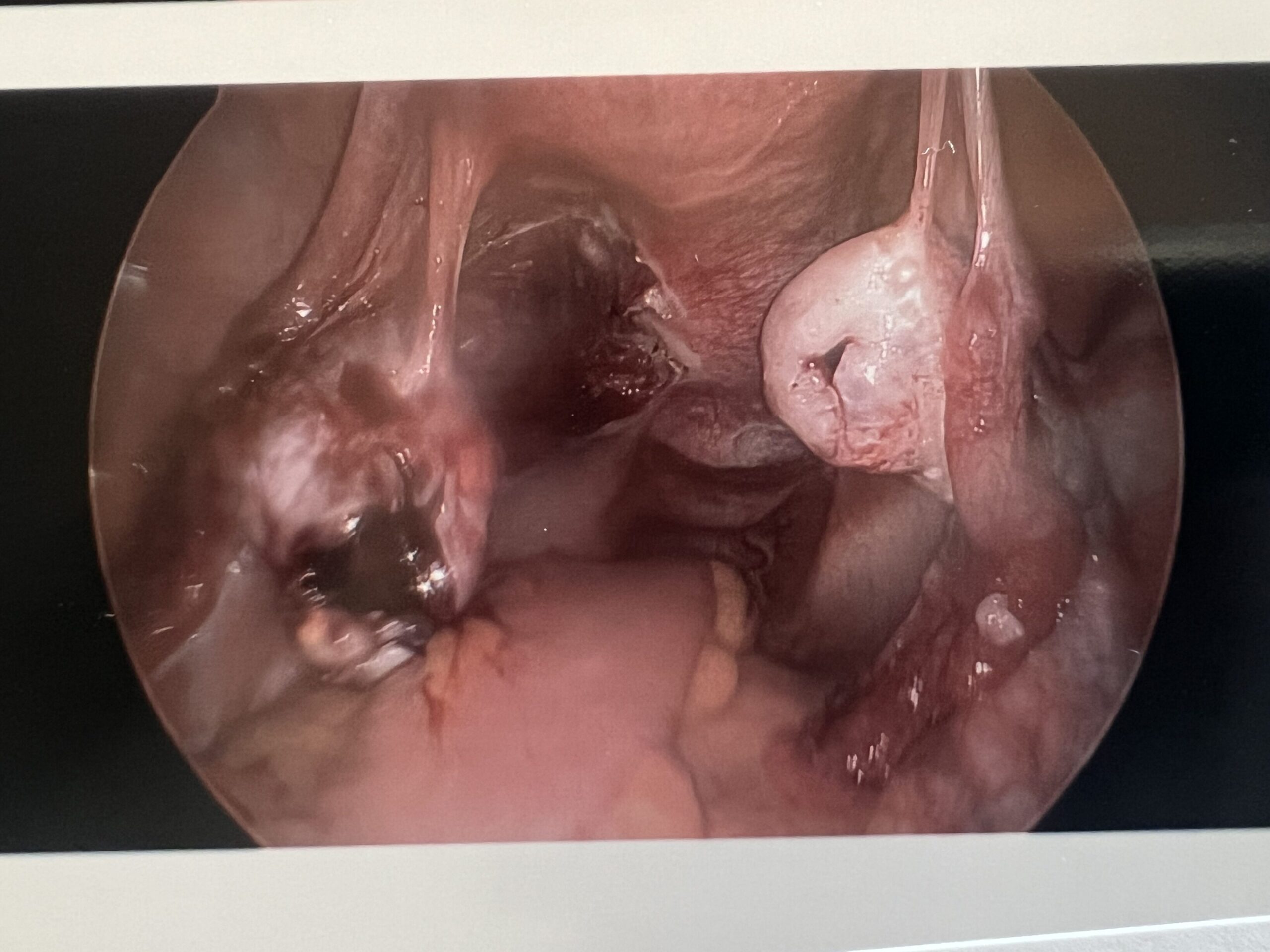
At the follow up appointment, the doctor says the pathology results confirm Endometriosis. It’s good and bad news.
The disease is not yet as extensive as they thought. They were able to excise everything externally visible. There is no way to remove endometriosis from the inside of the uterus (Adenomyosis), so the hope is that the IUD that was placed will help with those symptoms. It will still be up to six months before that impact can really be determined. Only then can discussion of a hysterectomy begin.
You are in limbo once again.
And once again, you go through the grieving process of being saddled with another lifelong invisible illness.
***
I’ve consumed just about as much information as my brain can hold about Endometriosis and Adenomyosis—blogs, articles, Reddit threads, medical journals, peer-reviewed research studies, Reels and TikToks. There are no causes; there are no definitive treatments; there are no preventions; there are no cures. But it is gaining more attention, and the research is rapidly evolving.
In a few days, I will turn 34 years old.
I think I am finally old enough to make my own choices.
I made these decisions two decades ago, but everyone told me I would change my mind.
They were wrong. I haven’t.
I don’t want children.
I don’t want a “geriatric” pregnancy. I don’t want the body horror of carrying a child and giving birth. I don’t want the risks of annihilating my physical and mental health. I don’t want to potentially pass on chronic, long-term conditions. I don’t want to bring life into a dying world.
I take pride now in fully embracing my privilege to choose to be childfree. I take pride in the decision be someone whose journey is to NOT physically birth new humans into the world. I think it is a shame that society teaches women that traditional motherhood is a primary purpose for all of our lives.
Maybe for some, but not for me.
I find more fulfillment in giving back to those who, like me, needed a bit more love and care than they received in this existence. My dogs, my plants, my home. I find more purpose in other forms of creation—writing, singing, painting.
Why can’t that be enough?
Why are my decisions not supported just as much as the women on the other end of the spectrum? The ones who are so desperate to conceive, carry, and birth a child? Why must I prove to everyone that what I want to do with my body is the right choice?
So, for now, I carefully monitor my mental state in my daily journal, just in case the IUD hormones start to mess with me. I have been bleeding and cramping for a month straight, but I continue to recite the Strongest Soldier’s lines:
“It’s normal… I can handle the ups and downs…. I’ll be back to myself soon.”
Am I that good at lying or have I been coerced into convincing myself?
But one day, mark my words, I will be uterless.
Until then, I manage. And I wait.