
I scramble around my teenage bedroom, looking for something to wear. Clothes pile on the floor as I discard item after item, irritated I can’t find something that I think looks good.
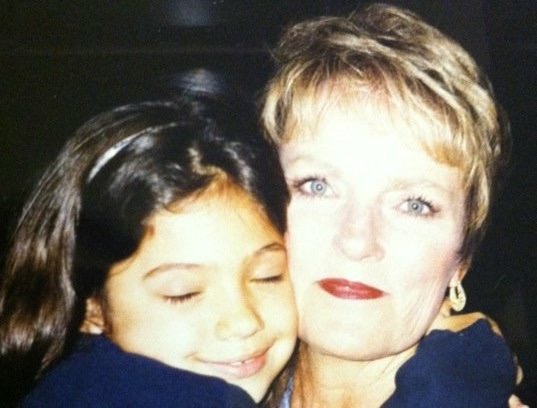
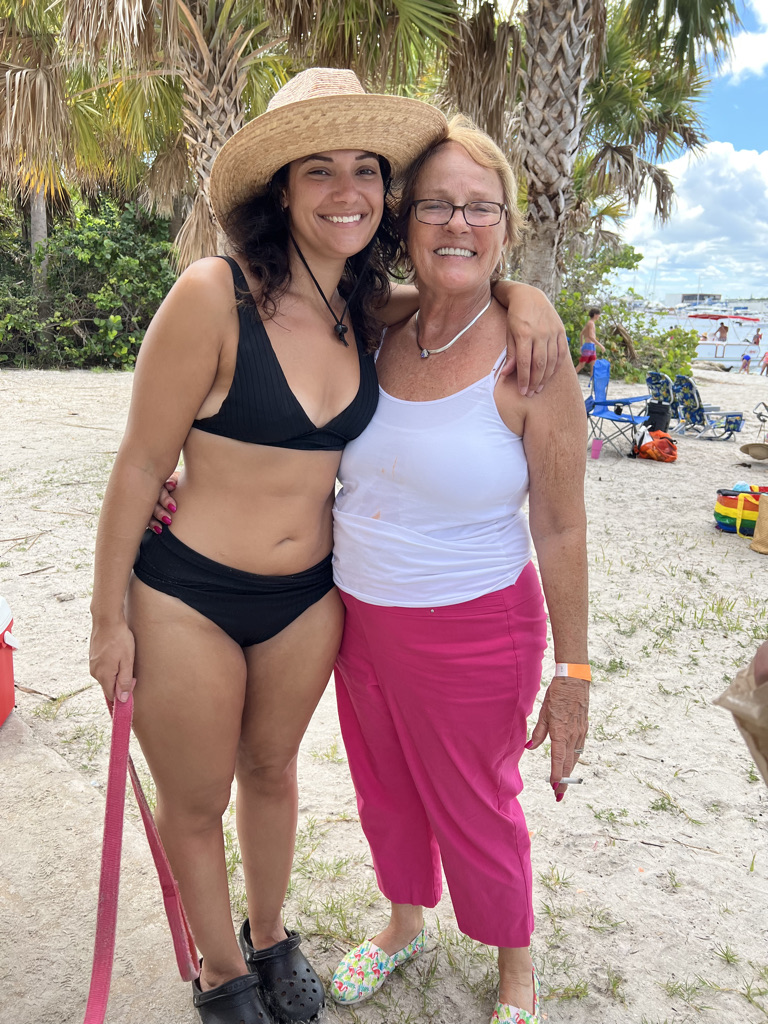
“Honey, are you in here?” My grandmother walks in, the energy of her smile matching her bright blue eyes. I called her Grammie when I was younger, but when my sister Liv was born, she couldn’t say Grammie, so Grammie became Mimi.
“Are you almost ready?”
I turn to Mimi with tears in my eyes. She has no idea, but I’m drowning in a shallow pool of vanity. I open my mouth and start crying.
She rushes over and embraces me.
“What’s wrong? Is everything okay?”
The child still in me is ready to tantrum. “No! I hate everything! None of these clothes fit. Everything makes me look fat! I hate myself!”
Mimi is quiet for a moment. The look on her face wears concern but shaded with understanding, not fear. She gently turns us, so our eyes meet in the mirror.
“I know I’ve told you this before, but I want to tell you again. Whenever you’re feeling anxious or insecure or self-loathing, just remember: shoulders back, chin up, and a smile on your face.”
*
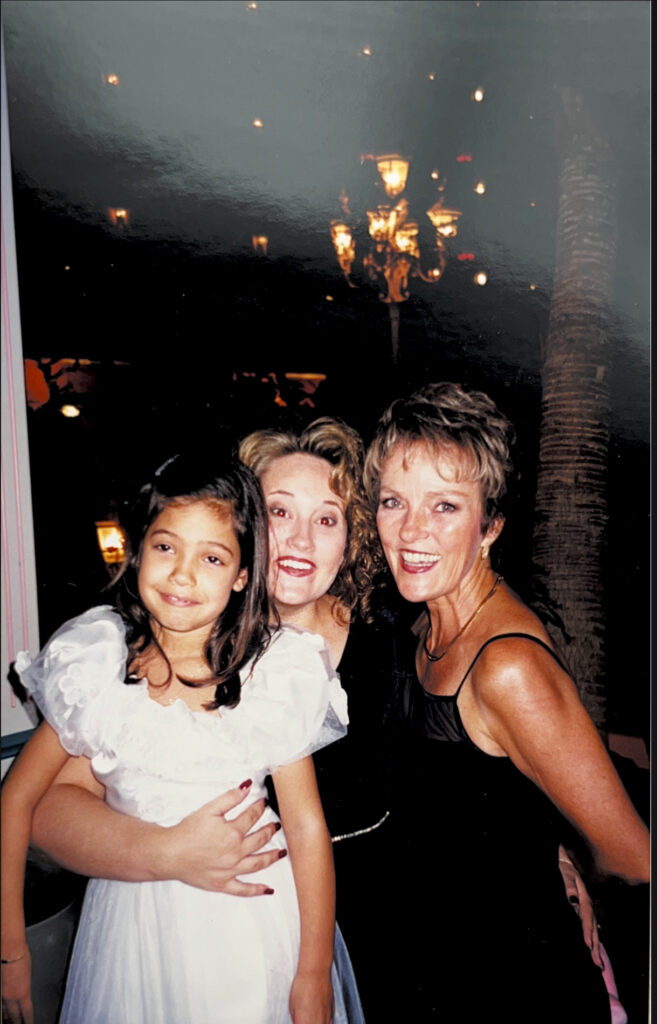
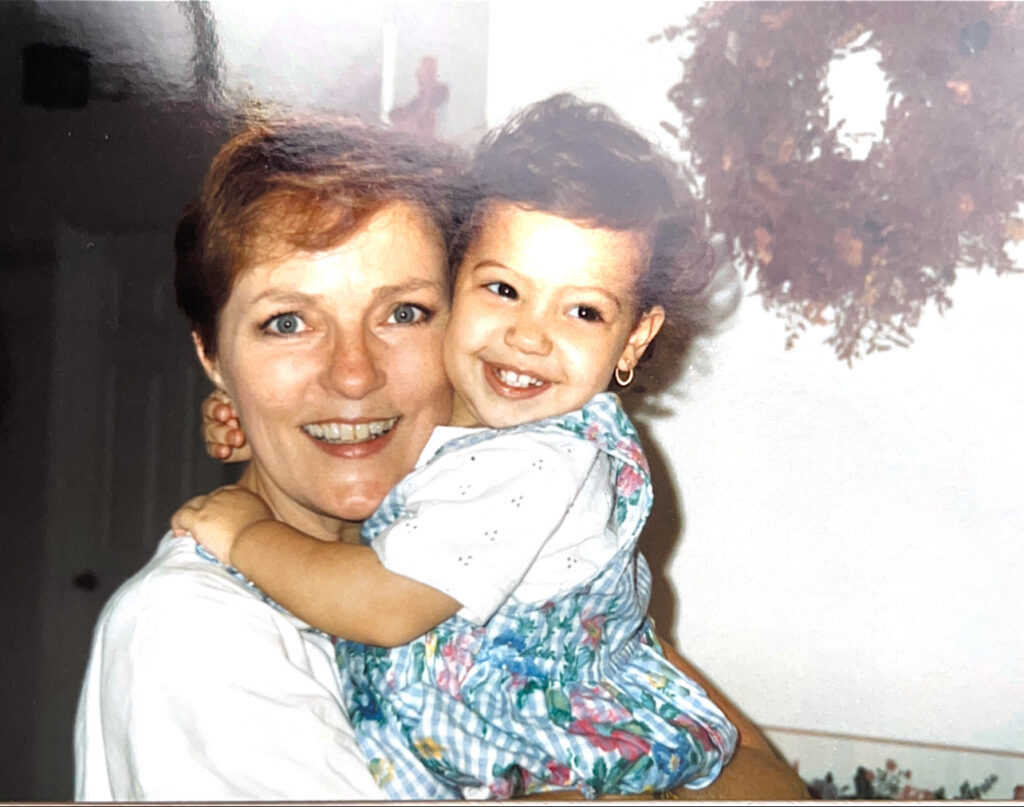
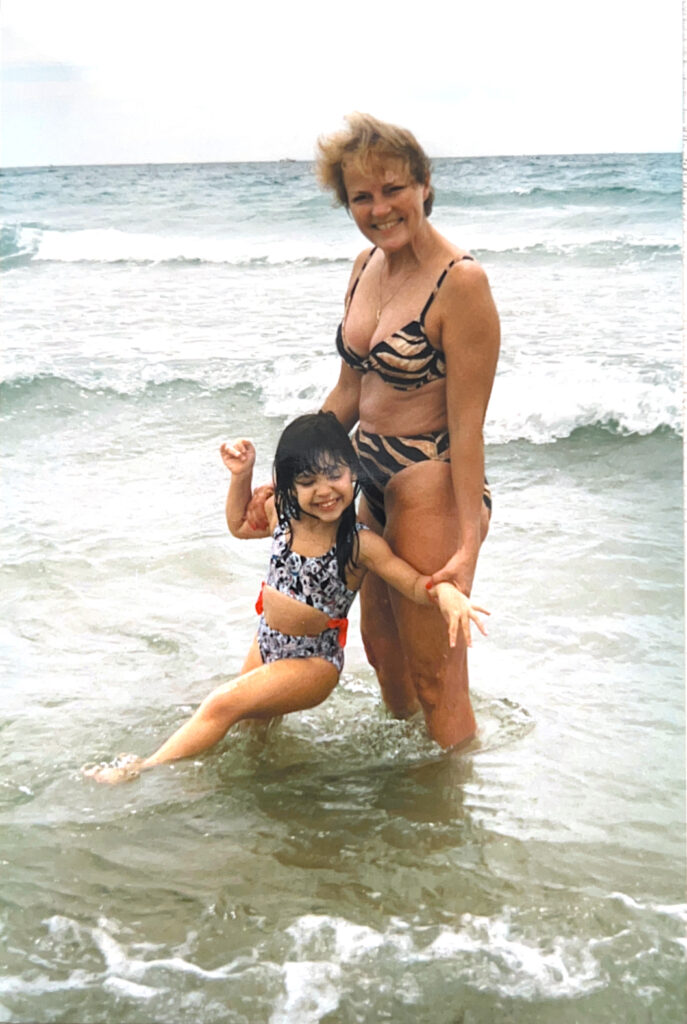
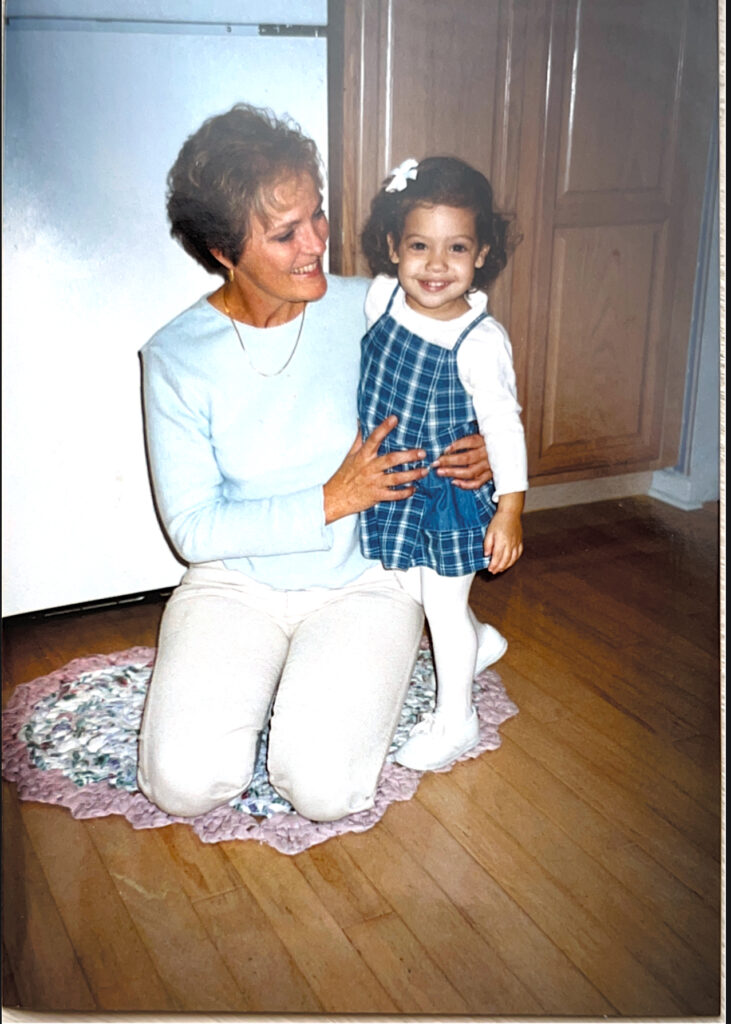
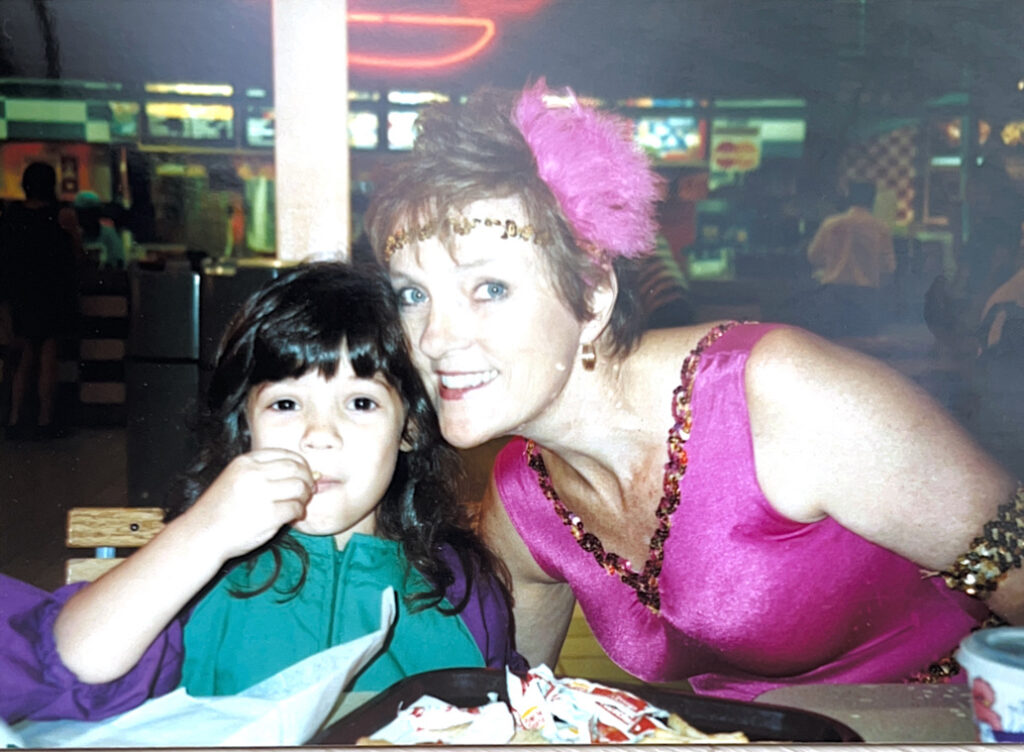
I lived with Mimi for the first six years of my life. Despite the misfortune of an absent father, I was blessed to have her as a second parent. Every night, Mimi and I ate dinner together before she would sing or read me to sleep. She dropped me off at school in the morning and picked me up in the afternoon. She bought Hooked on Phonics and encouraged my love of books and reading. She took me to the park and the pool and the beach and to visit my mother while she was bartending at our local Chili’s. I look back on those as the happiest years—when it was just us three girls. I wish she could still remember those times. I’m not sure how much she remembers these days.
I was very attached to Mimi. We raced each other to her bed at night because I liked sleeping with her better than being alone. She always let me win and steal her spot on the left side, where I sleep today in my own, adult bed. I cried every day when she took me to school. The teacher would put a small chair in front of the window, and I watched Mimi leave while the other kids started the day. I know she hated to be apart from me too because she visited every day during her lunch breaks. I’d press my face against the playground’s chain-linked fence, as close to her as possible, begging her to pick me up early.
I felt safe with Mimi. She was my protector. She was the only form of stability I ever had.
When my mom and stepdad had Olivia, they got married, and we left Mimi to live in a new home with our new family. Liv and I still spent many weekends at Mimi’s new apartment in Galt Mile. She moved in with her boyfriend, Buzz, a transplant from a small town in Kentucky. He had a mythical and strange life just like an interdimensional traveler, spending most of his life in loud barrooms, probably up to no good. Buzz calmed down by the time he met Mimi, ready to settle into the family he’d never had for himself.
Our sleepover routine was dancing to oldies, playing board games, and ordering pizza from the Italian restaurant downstairs. Liv and I slept on the pull-out couch, tasting the humid salt air on our tongues, watching Lord of the Rings or Harry Potter late into the night. When we woke, Buzz would make us pizza omelets with the leftovers and we’d walk across the street to Lauderdale Beach, sticky with sweat before baptizing ourselves in the Atlantic.
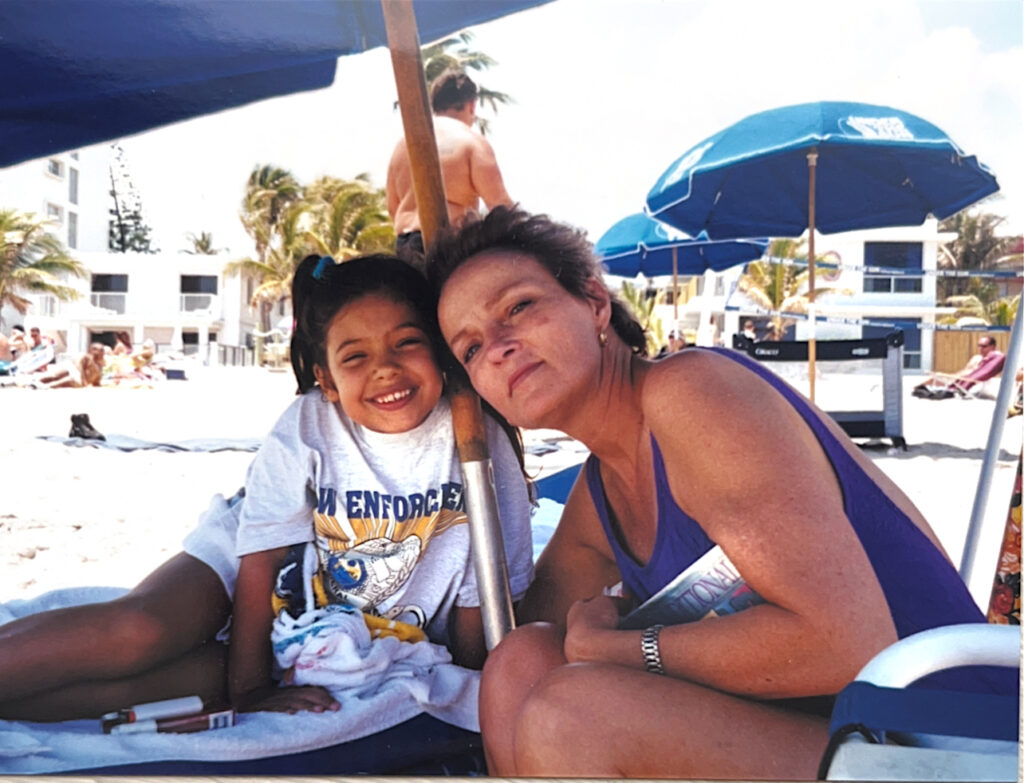
It wasn’t the same as living with together, but I was happy to be with her as much as I could.
*
I stand in Mimi’s apartment, trying to disguise my impatience and discomfort. It’s a melting summer day just after my 31st birthday and, for some reason, Buzz won’t keep the AC below 78. “She’s bad today,” he says before heading over to the pool.
I try to get her attention again. “Meem, I don’t think you’re going to need a hat inside. It’s too hot to eat outside right now.”
“I know, I know, but I like to have it just in case. Which one do you think is better?”
She tries on two straw hats. One round with a blue bow and the other duck-billed with a white bow. She looks through the mirror for my approval.
“Hmmm…I think the blue. It matches your pants!”
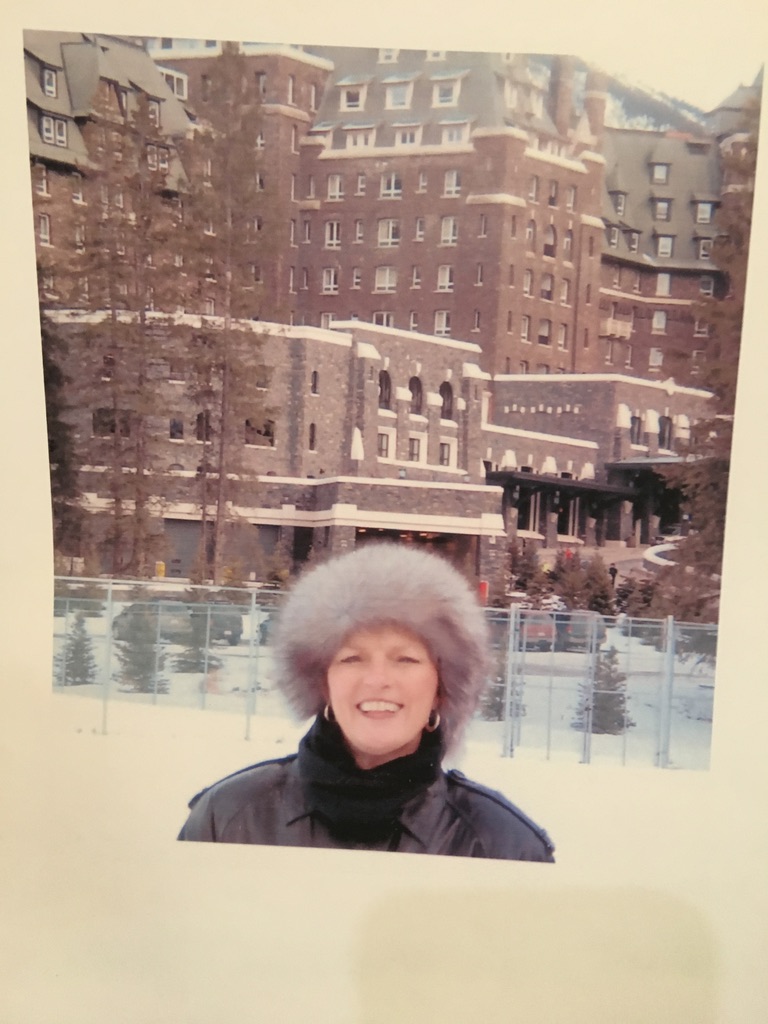
The same pants she’s worn the last three times I’ve seen her. The same shirt too. And shoes. They’re not dirty; she just refuses to wear anything but this one outfit. I know better by now not to argue with her about what she wants to put on her body.
She tries both on again. Looks in the mirror.
“Ugh…No, no, no. Ugly! Ugly!!”
“What’s ugly? The hats?”
She turns around to face me, throwing everything on the table.
“No, me! I’m ugly!” She stomps into the corner, staring at the wall, muttering to herself.
I don’t know what to say, but I understand exactly how she feels. I can relate to the mental prison she lives in—that’s a feeling I’m all too familiar with—but she has no idea she’s trapped. I know that if I want to make her feel better, I have to be present with positive energy.
I look around and spot a blue Tommy Bahama hat in the kitchen.
I place it on her head and smile.
“Don’t say that Mimi, you’re perfect. What about this?”
I turn her around and smile at our reflections. “I think this is the one.”
She adjusts the hat in the mirror, smiles, and laughs with me.
She looks like herself again. She always liked her hats.
“Oh okay…let’s get out of here. Where are we going? Do you have a car? By the way, where do you live?”
*
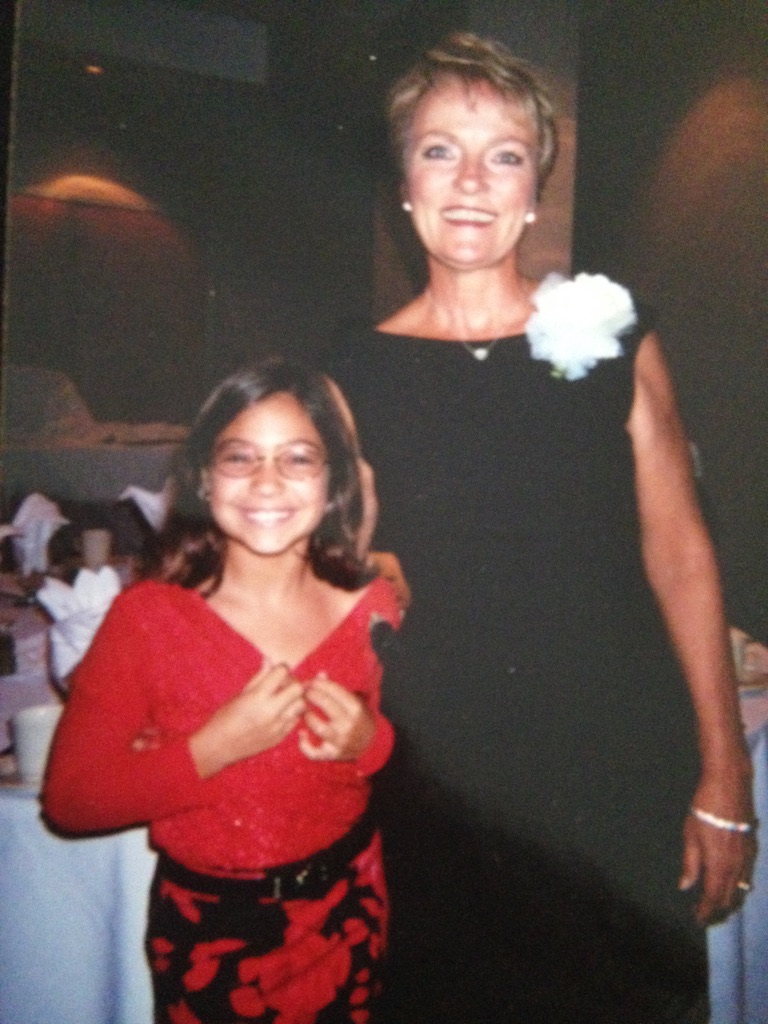
When I was 13, we moved from Broward County to Palm Beach. My parents decided after years of rentals that we would build a house where Mimi and Buzz could live with us. We later moved into “The Compound,” our dream home that ended up being far from a dream. Our family had some of dark moments in that house, but we all wished for it back again after it became a casualty of the 2008 recession. Afterward, we went back to rentals and Mimi and Buzz moved back east, where they still live today.
Mimi knew how deeply I was struggling when we lived at The Compound, but we never spoke openly about it. One night, after I was assaulted, she rubbed my hair while I cried in her lap. Without saying a word to explain myself or why I was crying, she told me about the time she had been assaulted. When I finally asked for help with my eating disorder, she paid for my expensive inpatient treatment without hesitation. She intuitively understood what I needed, even when I didn’t. She always told me that I didn’t have to be defined by the bad things I’d been through. She never failed to remind me that God had a plan.
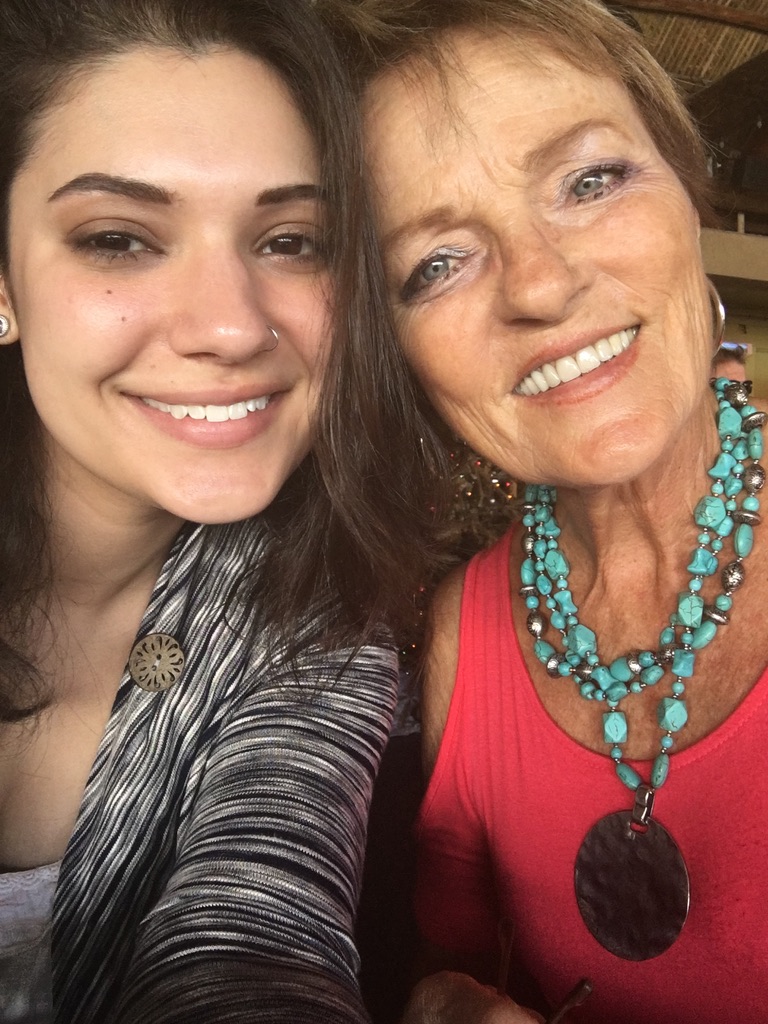
I don’t remember exactly when we noticed something was wrong with Mimi. It came on slow and malignant, a dark shadow clouding over her bright light. She was forgetting things she normally remembered. She’d grown more irritable and paranoid. There were a few crisis points: when she got lost on the way home and the police had to find her, the first time she thought Buzz was a stranger breaking into her house, the night she called crying because she knew something was wrong with her mind but couldn’t find the words to explain it.
Even though Mimi asked for help, she never got a proper diagnosis. Like many of our other family issues, we brushed it aside, delayed and waited. Mom tried to take her to the doctor a few times but fearing Mimi’s irritable wrath, never completed the testing, never started any medication. I guess it really doesn’t matter when the outcome is the same in the end. Now, several years later, Mimi is a hollowed-out version of herself. There are still flashes of who we love and long for, but there is an undeniable emptiness about her. She lingers like the living dead, a ghost of her former being.
*
I arrive to find her on the porch, chain-smoking Capri Magenta 120s and sipping on a cold Coke for breakfast. Mimi sits in her rocking chair, a bowl of twelve lighters next to her ashtray, heels perched on a footstool, looking out to the cul-de-sac to see which neighbors are passing with no attempt to hide her nosiness. She’s with it today.
I take her to BurgerFi because lately she’ll only eat a hamburger or tuna, which limits our lunch options. She can’t decide if she likes the food or not. She’s firm on the fries, which I agree are too burnt. But within the same minute, she tells that she loves the burger and it’s the worst thing she’s ever had in her life. I tell her we’ll go to Five Guys next time.
We get back in the car.
“So where are we going next?” She’s happy, chipper even. She doesn’t always want to continue our outings.
“Hmmm, well where would you like to go?”
“Oh, I don’t know…Just somewhere we can walk around and look at stuff.”
I drive around the mall, trying to find something tolerable for both of us.
“What about Dollar Tree? Bet you haven’t been there since everything only cost a dollar.”
“It’s not a dollar anymore?”
“Dollar twenty-five! Inflation!”
She laughs, hard. I feel good when I make her laugh.
We look at the cheap Halloween and Christmas decorations out on display even earlier this year. I let myself wander and Mimi follows behind. I touch a few things here and there—a pack of stickers, a bottle of soap, a mini bag of Reese’s, a soft teddy bear. I turn around to make sure she’s not lollygagging too far. She likes to wander off now.
Instead, I find her with arms full of all of the things I touched.
“I want to buy these things for you! This is what you liked, right?”
The emotions that I too often suppress threaten to overwhelm me. The grief and pain I’ve ignored over these last few months instantly feel suffocating.
I struggle to stay composed as we check out. She picks up the teddy bear from the cashier, gives it a kiss, and hands it to me.
“A little fuzzy friend for you. I love you.”
I simmer my emotions until I drop her off. But as soon as I’m alone, I sob. I hold the teddy bear to my chest and cry until I can’t breathe, until my throat swells shut, until my brain feels like it will leak from my ears. I’m not sure how, but she still feels the desire to provide for me, even if it’s just some silly things from Dollar Tree. Mimi is both here and there, caught between worlds. When I see her, I am sick with longing, though she hasn’t completely departed yet. At least she still intuits who I am to her.
*

Alzheimer’s and dementia are some of the cruelest diseases. The more open I am with people about this experience, the more I realize how common this devastation is. One of the things that still entertains and shocks me is the similarity between individuals with this terminal suffering. Someone’s mother was also a master escape artist, another whose aunt also chain-smoked and pulled out the cigarette filters, and someone’s grandma whose meal of choice was also a hamburger and a cold Coke. I feel the polarizing love and hate in these conversations—the nostalgic memories and humorous moments mixed deeply with resentment and remorse. But it’s the same lesson I’ve learned over and over regarding suffering: let go or be dragged.
Mimi has continued to devolve, remains mostly homebound, and barely remembers anything through the day. It feels impossible at times to carry the weight of her mental absence against her continued physical presence. Despite the gray matter decline, Mimi is healthier than most 80-year-olds. She could easily live another 10 or 15 years.
Last year, Mother asked me if I wanted to work as her caretaker while I continued to search for employment. It was a better option at the time than hiring a stranger, and now I think there is a divine reason I’ve been positioned to care for her over these months, just the same as she spent years caring for me.
I know she’ll never return to who she was. I try to avoid ruminating on what I should have done while she was lucid, but sometimes I fall into the void of what-ifs. What if I had asked her more about her life and her struggles? What if I had been more open with her about my darkness? But dwelling on the past robs the present. Her body is still alive on this earth even if her mind is elsewhere. Taking our time together for granted would be foolish.
I’m grateful she mostly remembers who I am. For the first time recently, she had no idea who I was. It was to be expected, yet impossible to prepare for. But usually, when she sees me, she lights up with the same smile I’ve known and trusted my whole life. Her humor is better than ever and we laugh just as hard as we used to. We listen to the oldies radio and I notice the songs she still remembers the lyrics to: Don McClean’s “American Pie,” Carole King’s “You’ve Got a Friend,” Bill Withers’ “Lean on Me.” I play them on repeat and we sing loud with the windows down. Her energy persists and I always find ways to bring it out. But the inevitable outcome is always lingering: the dementia will get worse, soon she will not recognize me at all, and eventually, she will no longer be here. And here I am, bearing witness to it all.
Too often, I fear sharing my memories with the world. I wonder if there is a point in writing it all down. I tell myself no one will ever want to read my work. I procrastinate and delay and try to find something more practical to do. But as I watch Mimi forget her life, her experiences, her identity, something in my mind shifts. Maybe it is more important to remember than I thought. Maybe memory is important simply because I’m aware of its absence.
And Mimi would have wanted me to write.
*
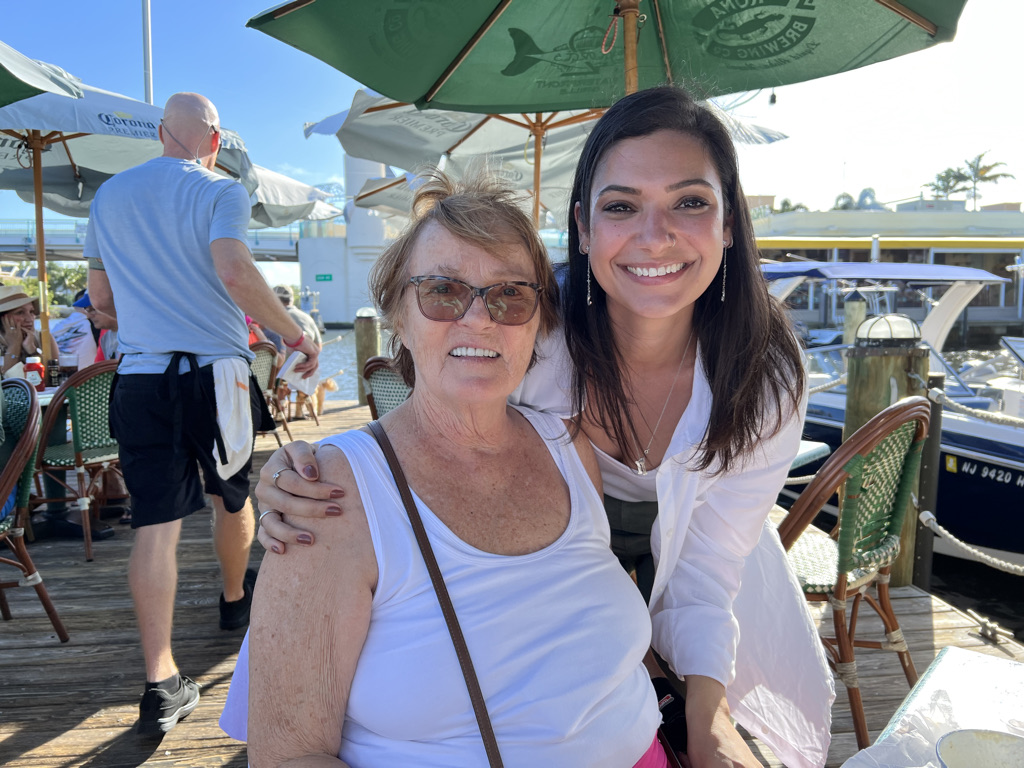
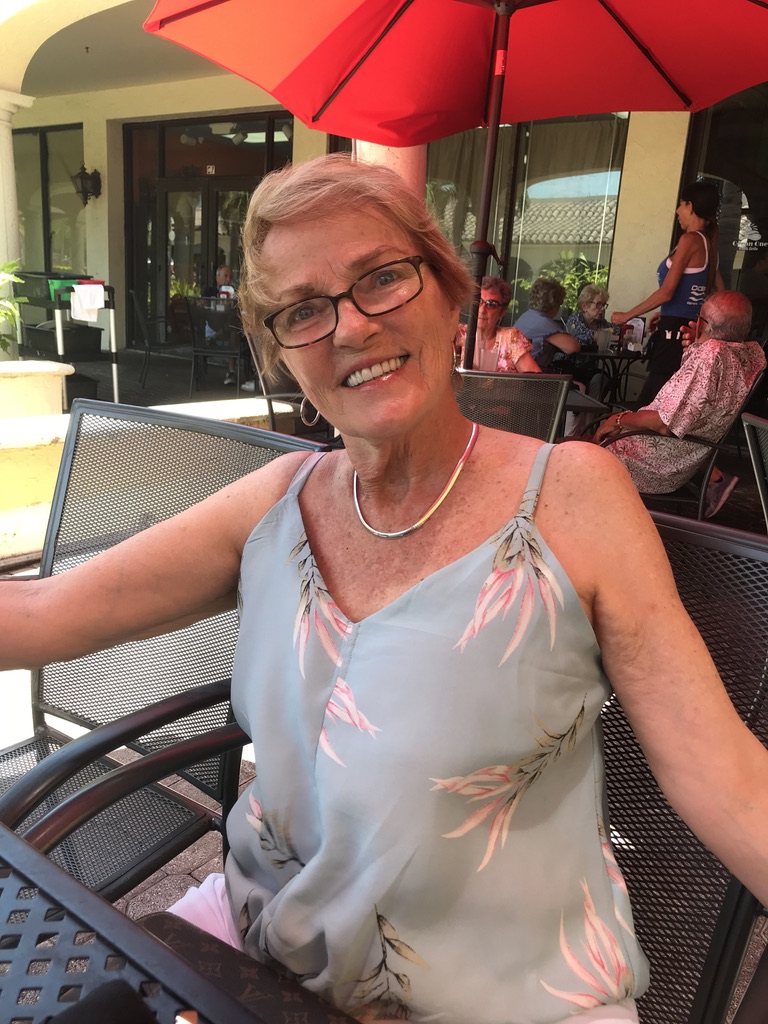
It’s a bad day again. At noon the lights are off, and Mimi is still sleeping. She jumps as I wake her, cursing me for scaring her. She grudgingly gets up and isn’t pleased to see me. She’s not usually like this so I give her grace, offer to pick out her outfit, and ask if she’s hungry. She’s always hungry, and usually in a better mood after she eats.
We get in the car, ready to continue our never-ending quest for her favorite burger place. But when we get to Five Guys, she hesitates to get out.
She looks at me with a sour face, motioning to her stomach. “I don’t feel good.”
“What do you mean? Are you nauseous?”
“No, not like that…Not sick. It’s like…” She can’t find the words. Her mouth moves but nothing comes out. Tears line her eyes. She waves her hands, trying to conjure the cognition from thin air. She doesn’t need to verbalize; I understand exactly what she needs.
“Do you feel anxious? Like butterflies in your stomach but not in a good way?”
She looks at me with relief, nodding rapidly. “Yes…That! That’s what I’m feeling!”
“I know that feeling, trust me.” I take her hand and look into those familiar blue eyes. “You know, someone once taught me a great trick for that.”
“Really? Does it help?”
“I think so! You can try and let me know.”
“Well, tell me!”
I pull open her sun visor mirror and position myself in the rearview.
“Alright, you have to do some movements, so I want you to see yourself. First, let’s fix your posture. Shoulders back.”
I move my shoulders back and stick my chest out. She mimics.
“Perfect! Now, chin up.” I tap my finger under her whiskery chin.
We both look at our reflections with shoulders back, chins up.
“That’s it! Okay, now, finally, the most important part.”
“What’s that?”
“A smile on your face.”
I make an exaggerated smile at her in the mirror. She smiles back and laughs, hard.
“That’s it?”
“Yup…Those three things: shoulders back, chin up, and a smile on your face. Best anxiety cure there is.”
She beams at me with her chin up and her shoulders back. She looks like herself again.
“I love that! Thank you honey, I’m going to remember this one.”
Ashley, you are an amazing writer, able to put so much into words that most can’t convey that type of emotion it brings up. She would, and is, so proud of the woman you’ve become and your love for her is powerful. My heart breaks knowing the pain, heartache, frustration and longing you are going through. I’m so glad you found the strength to be able to care for her, this is something you will never regret even though it may be one of the toughest things you’ll deal with. I loved reading this and am grateful to know about your life. Keep writing, you are able to make people feel and have emotion. Love you.
Ash, this was absolutely beautiful . I am so sorry to hear about Mimi. I will pray that she has more better days. Please send my love to mom. Love and miss you all. Xoxo always
a beautifully painful and relatable piece. thank you for sharing this.❤️